Applique Embroidery Digitizing & Printed Fabric Solutions.
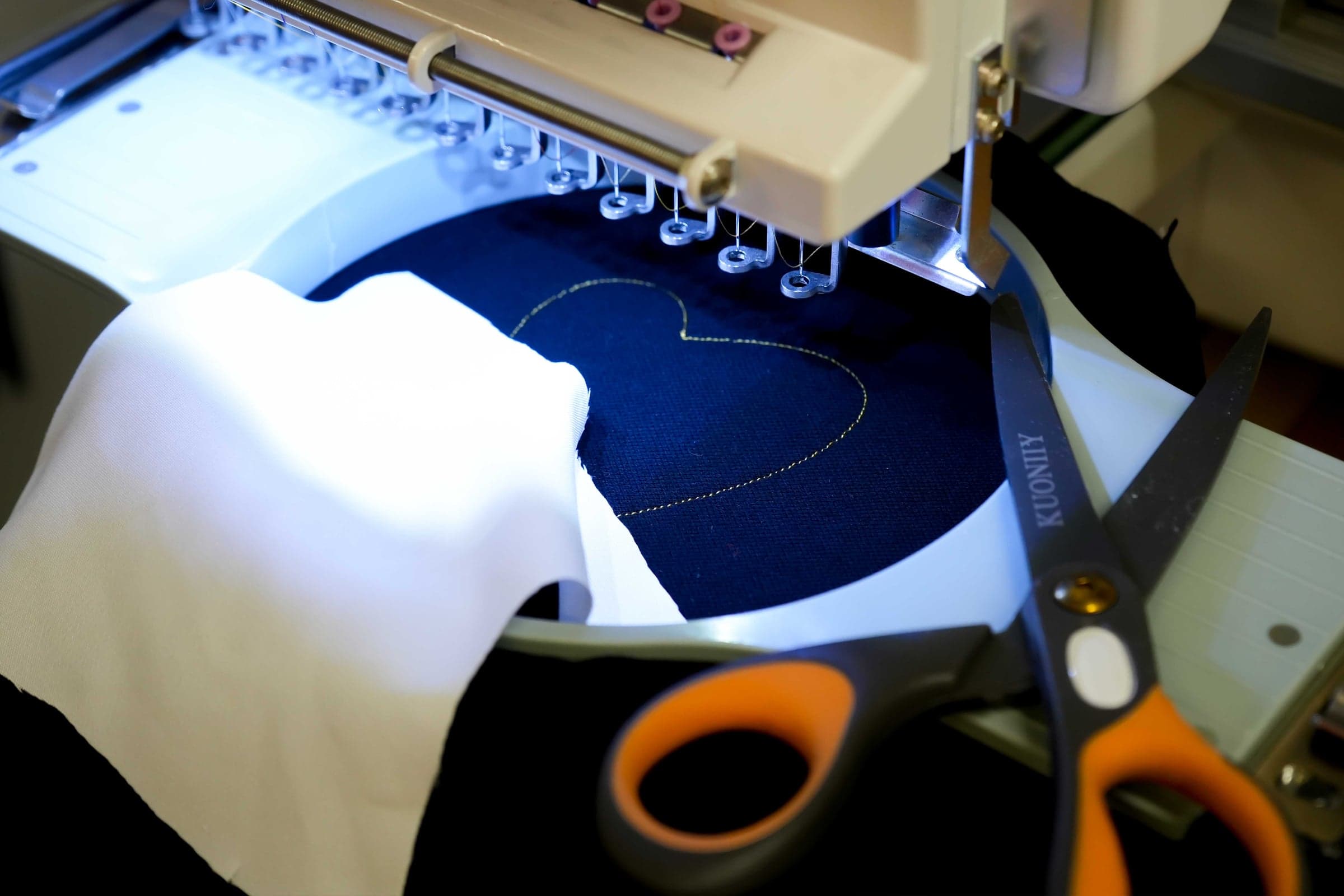
Applique is used to reduce stitch counts on large fill areas, but poor file setup can lead to fabric shifting, bubbling, or fraying through the border over time. We prepare applique files with controlled placement, tack-down sequencing, and appropriate border sizing to support cleaner production. For detailed projects, we can also supply custom laser-cut printed fabrics alongside the digitized file.
Hand-Cut vs Pre-Cut Applique
The way an applique file is prepared depends on how fabric is handled during production. For hand-cut workflows, the file must allow stable placement and controlled trimming during machine stops. For pre-cut or laser-cut fabrics, the file must align precisely with the cut shape. Letting us know your cutting method allows us to prepare the file to suit your workflow and reduce issues such as exposed edges or misalignment.
Placing the Top Fabric
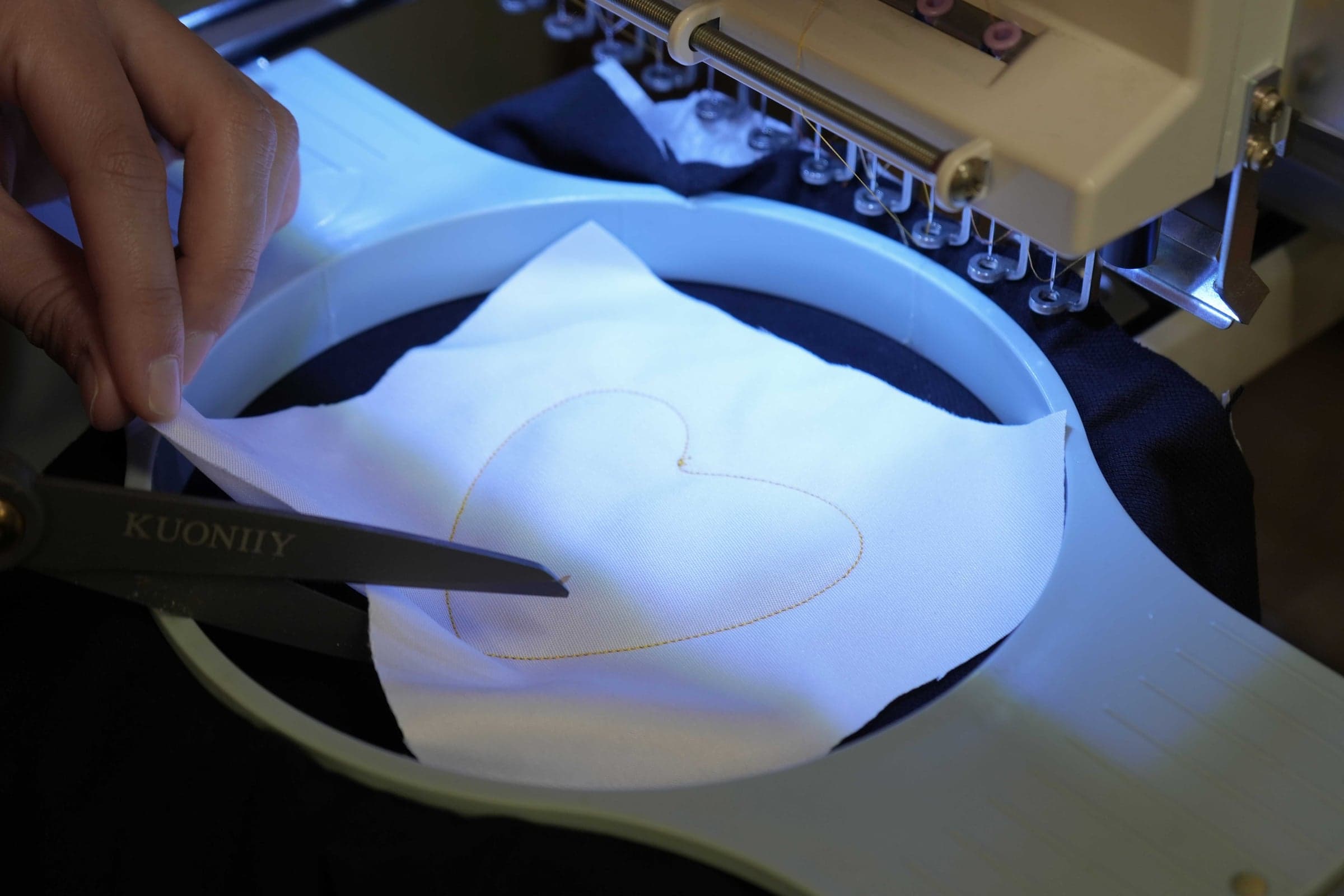
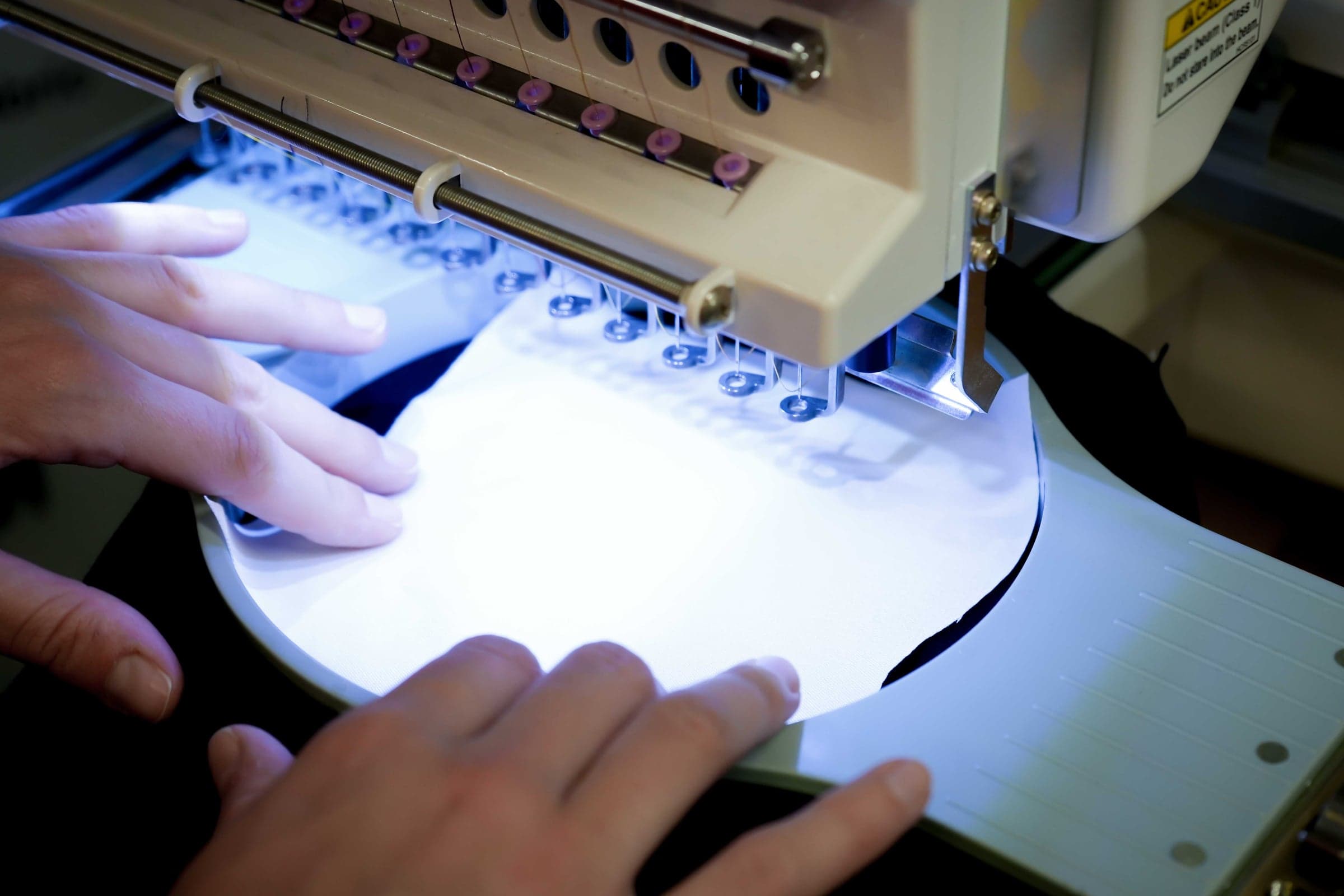
Applique only behaves on the file if the fabric goes down clean. After the placement stitch runs, the operator drops the top fabric over the marked area, smooths it flat, and lets the tack-down run before any trimming. Files we prepare leave clear pauses for this step so the operator can position fabric without fighting the design.
Replacing Stitch with Fabric
Large stitched fill areas increase stitch count, machine time, and garment stiffness. Applique replaces these areas with fabric, reducing the number of stitches required while maintaining visual coverage. This approach is commonly used on large logos, jacket backs, and designs with solid background areas where efficiency and flexibility are important.
Combining Print and Applique
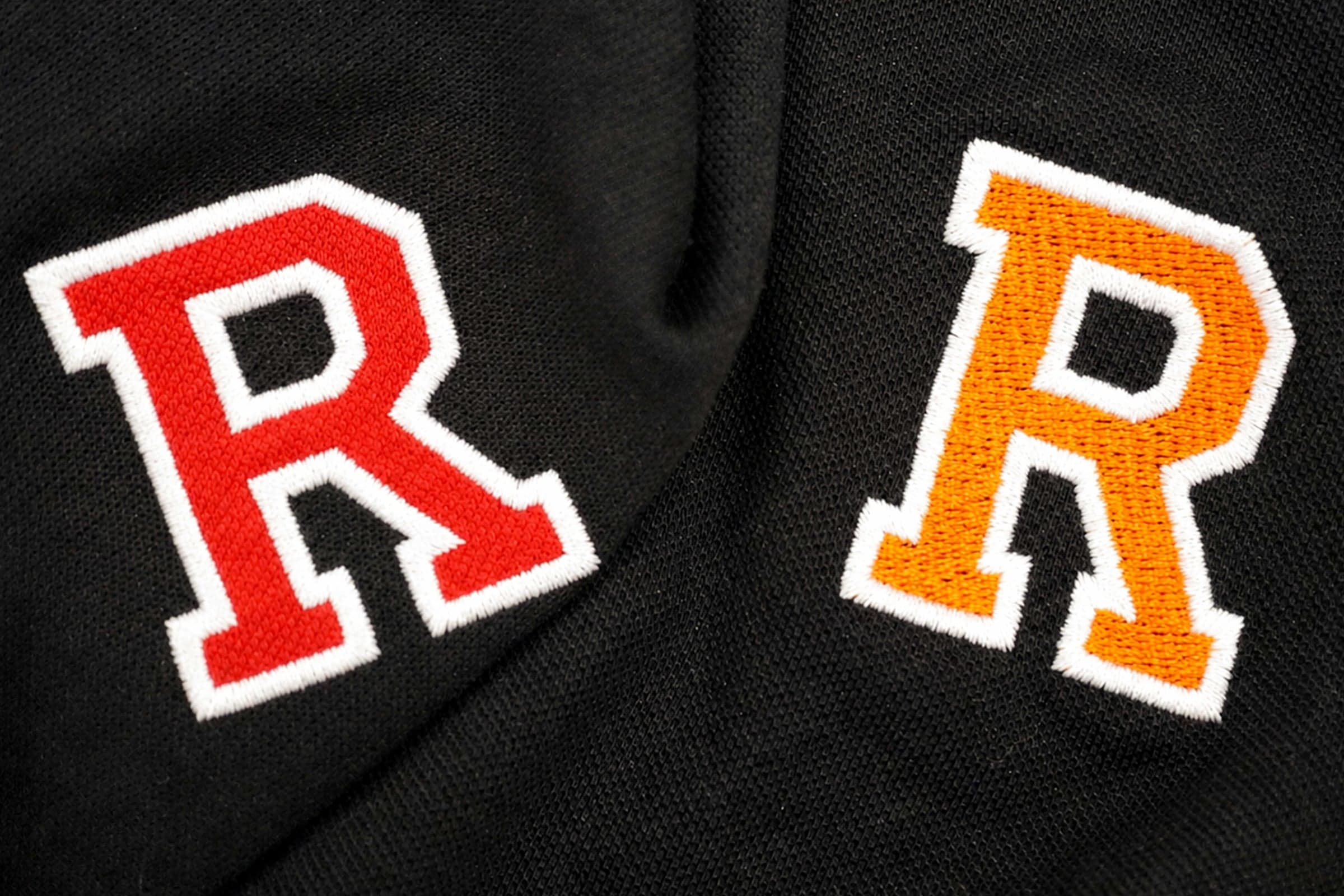
Applique can be combined with printed fabric to handle detailed artwork that would be difficult to reproduce using thread alone. Printed fabric carries fine detail and allows for virtually unlimited colours (though printed fabrics will not match Pantone references exactly), while embroidery is used to secure edges and add structure. For selected projects, we can supply both the digitized file and custom laser-cut printed fabric, providing a complete production-ready setup.

Setting Up Your Applique Run
✓Do
- ✓DO inform us of your cutting method: let us know if you are using hand-cut, pre-cut, or laser-cut fabrics.
- ✓DO use applique for large fill areas: replacing dense stitching with fabric reduces stitch count and machine time.
- ✓DO test new fabrics before production runs: always test how a new material reacts to tension and washing.
✕Don't
- ✕DON'T use very thin satin borders: narrow borders may not fully contain fabric edges over time.
- ✕DON'T rely only on edge stitching for large areas: larger pieces may require internal support to reduce bubbling.
- ✕DON'T over-densify borders: excessive density can place stress on the fabric edge and cause perforation.
- ✕DON'T rush trimming during machine stops: limited clearance increases the risk of accidentally cutting the base garment.
The Shared Responsibility of Production. File preparation and physical handling both influence the final result.
The Reality of Production: Securing the Fabric
Applique depends on both file structure and how the fabric is handled during production. To reduce shifting, bubbling, and edge issues:
- ✓Use adhesive support: Use spray tack or heat-fusible web to secure fabric before stitching. This helps reduce movement during the run.
- ✓Trim accurately: Use appropriate applique scissors when hand-cutting to maintain consistent edge distance from the tack-down stitch.
- ✓Match fabric stability: Ensure the applique fabric is compatible with the base garment to reduce distortion after washing.
A placement stitch marks where the fabric should be positioned. The machine then stops so the fabric can be laid down. The tack-down stitch follows to secure the fabric before the final border is applied.
A satin border between approximately 3.5mm and 5mm is commonly used. Narrow borders may not fully cover the fabric edge, while excessive density can place stress on the material over time.
Bubbling can occur when large fabric areas are not adequately supported or secured. Movement during stitching or after hoop removal can cause the fabric to lift. Internal support stitching or proper adhesive use can help reduce this effect.
Fraying is often related to border width, stitch density, or fabric type. If the edge is not fully enclosed or the material is prone to fraying, fibers may appear after washing. Adjusting border width and fabric selection can help reduce this.
Yes. For suitable projects, we can provide both the digitized file and custom laser-cut printed fabric. This allows detailed designs to be produced without relying entirely on dense stitching.
Looking to Reduce Stitch Count and Production Time?
Quote My Applique DesignSend us your design and we'll review whether applique is suitable for your production setup.
Questions first? Just ask in the chat — or call 0800 368 7414.