
Small Text Embroidery Digitizing Built for Clarity.
Small text embroidery digitizing for logos, workwear, and promotional garments requires precise density control. When stitches are packed too tightly, lettering can lose definition, thread can build up under the needle plate, and the fabric can be placed under excessive stress. We manually structure every character to improve spacing and flow, helping keep text readable and more stable during production.
Why Small Text Turns into a "Blob" (And How We Approach It)
When small text is created by simply scaling down a larger design without adjusting for thread thickness, results can become inconsistent. The internal spaces inside letters (such as 'a' or 'e') may begin to close, reducing readability and making the text appear dense. At very small sizes, placing too many stitches into a limited area can also affect how the fabric behaves during stitching. For small text digitizing, we rebuild each letter with scale in mind—reducing unnecessary stitch density and adjusting stitch direction to help maintain clarity.

Built Differently for Small-Scale Embroidery
At smaller sizes, the way a design is structured becomes more important than the design itself. Standardised approaches often introduce excessive stops, trims, and stitch buildup, which can affect how the design runs on the machine. We take a more controlled approach to small text. Each word is prepared based on its specific size, spacing, and structure rather than applying fixed rules across every design. This helps reduce unnecessary interruptions during stitching and supports cleaner, more consistent results.

Machine Limits and the Thin Thread Solution
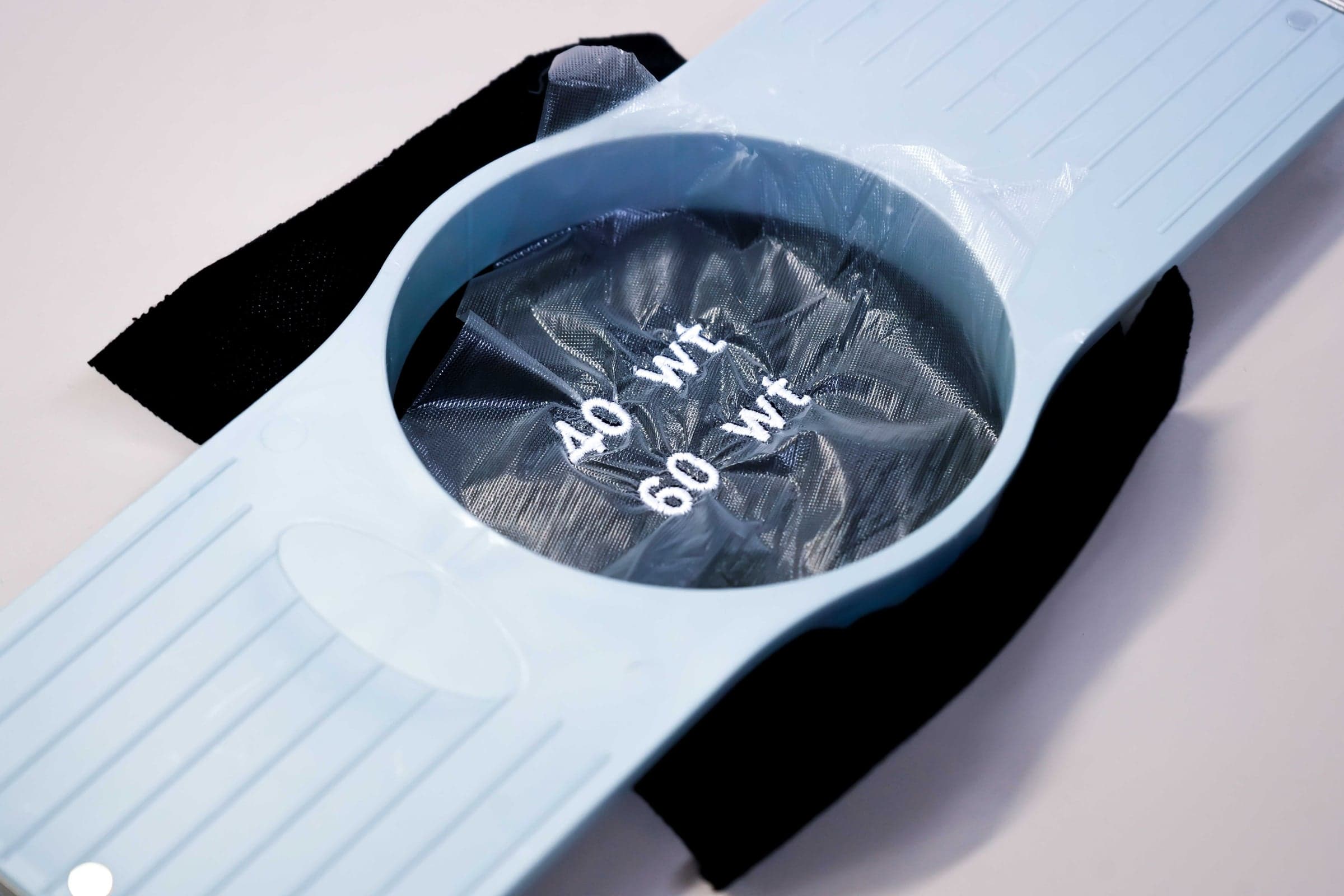
There are practical limits to how small standard 40-weight embroidery thread can stitch effectively. For most machines, standard text can drop to about 4.5mm to 5mm in height, with newer machines pushing down to roughly 4mm. To go smaller (down to 3.5mm), switching to a thinner 60-weight thread is usually required. We digitized the demonstration file used by Madeira Threads to showcase the performance difference between standard and thin threads at small scales.
Setting Up Your Small Text Run
✓Do
- ✓DO use simple, sans-serif fonts: Fonts like Arial or Helvetica have clean lines that translate much more effectively to small-scale embroidery.
- ✓DO inform us of your thread weight: Let us know if you plan to use standard 40wt or thinner 60wt thread so we can adjust the file density accordingly.
✕Don't
- ✕DON'T use complex serif or script fonts below 6mm: Fine strokes and decorative edges may not hold their shape at very small sizes and can reduce readability.
- ✕DON'T expect an exact business card match at 6mm: Thread has physical thickness. Micro-text from printed media often requires slight enlargement or simplification to remain readable on garments.
- ✕DON'T assume all machines behave the same: Older machines, worn needles, or incorrect tension settings can affect how small text performs, even with a well-prepared file.
The Shared Responsibility of Production. A clear file is only half the equation — your machine setup plays a major role in final legibility.
The Reality of Production: Machine Setup for Small Text
Even the most carefully structured file operates within the physical limits of a needle and thread. To help your small text files run cleanly and clearly, we recommend these shop-floor adjustments:
- ✓Match your needle to your thread: If you are using standard 40wt thread, ensure your needle is sharp. If you drop down to 60wt thread for micro-text, swap to a smaller 65/9 or 70/10 needle to reduce the puncture hole size in the garment.
- ✓Use water-soluble topping: When embroidering small text on textured fabrics (like pique polo shirts, knitwear, or fleece), placing a layer of water-soluble topping over the garment helps prevent the tiny stitches from sinking into the fabric pile.
- ✓Check your tensions: Tight tensions on small text can cause puckering and registration issues. Ensure your machine is properly calibrated for fine detail work.
Textured fabrics like pique knits tend to grab and pull small stitches in different directions, causing the edges of letters to look jagged. While we apply adjustments within the file to help manage fabric movement, using a sturdy backing and a water-soluble topping is highly recommended to keep the text sitting flat on the surface.
Yes, but older machines generally require a slightly larger minimum text size (around 5mm) compared to newer models because they may struggle with extremely tight tolerances and micro-movements. If you are running an older machine, please let us know so we can structure the file appropriately.
Stability is critical for small lettering. If the fabric shifts even a fraction of a millimeter during the run, the letters will look distorted. We generally recommend using a high-quality cutaway backing, hooped tightly, to provide the firmest possible foundation for small text.
The "Eye Test" for Your Embroidery Machine
Every machine behaves differently. Tension setup, thread type, fabric, and machine condition all influence how small text performs. Testing the limits of your setup on a live client order can be costly. To help commercial decorators understand their real-world capabilities, we use structured test files—similar in concept to an optometrist's eye chart for your machine. This allows you to assess how small your text can go under your specific conditions, and where adjustments such as thinner threads or setup changes may be required.
Speak to an ExpertThese resources are intended for commercial embroidery businesses running regular production. If you'd like to review your setup and understand your machine's practical limits, speak to our team.
Need Crisp, Readable Small Text?
Get Your Small Text QuoteLet our team review how your lettering can be improved for clarity and production.
Questions first? Just ask in the chat — or call 0800 368 7414.